Stories of Impact: Ronette Slamin

January 11, 2026

Home News and Updates Stories of Impact: Ronette Slamin


Connecting Captial and Community with Ronnette “Ronnie” Slamin

Ronnie moved to DC six years ago with her family, looking to build a life and a career, in the District where access to affordable housing is one of the largest issues communities face. As a real estate project manager at the time, and now developer and founder of Embolden Real Estate, she was realistic about the challenges that come with navigating the pressure, demand, and competition that define DC’s real estate market.
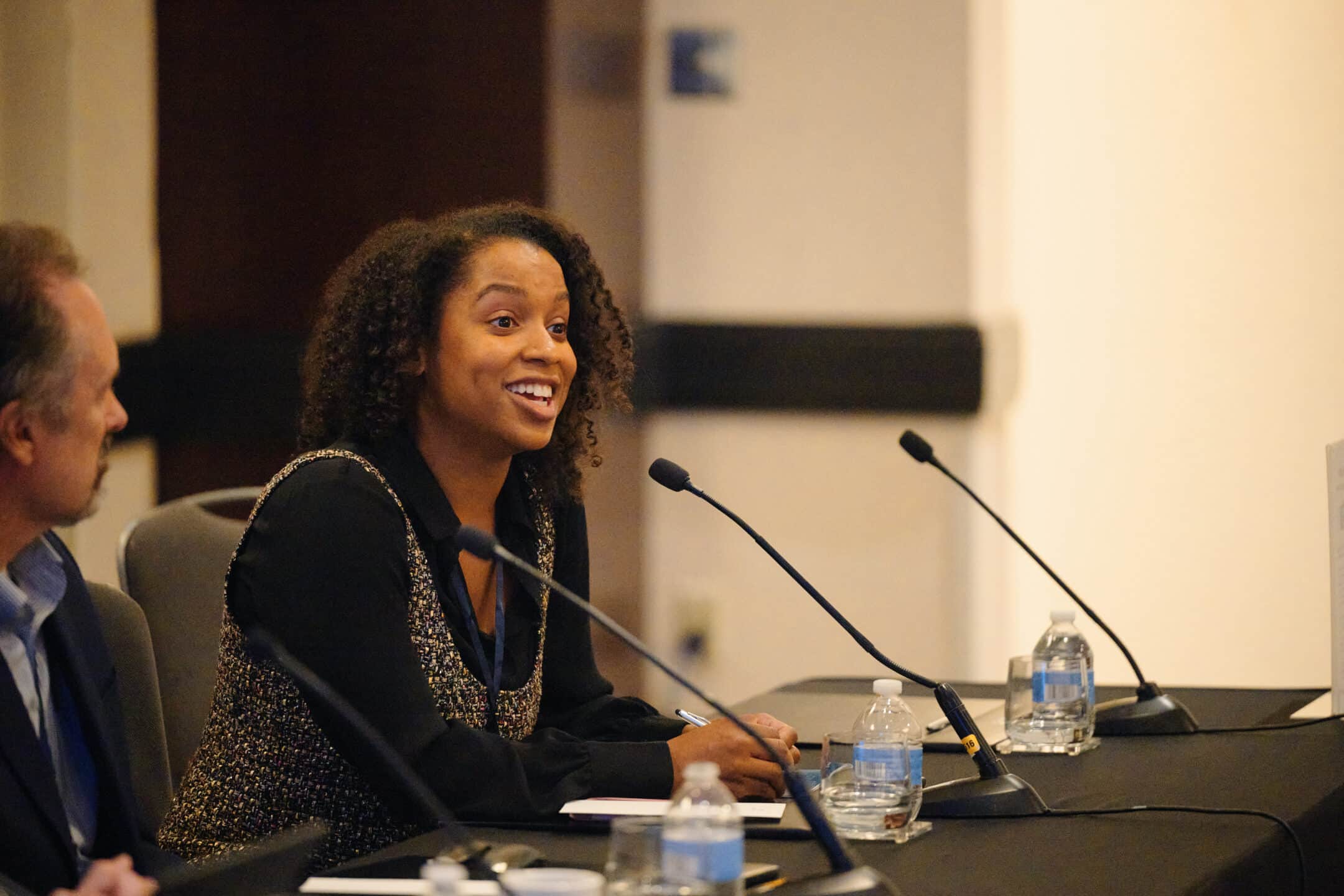

You have a lot of companies here in DC that … don’t want to be in the 5-to-50-unit range. There are usually concerns about economies of scale and paperwork associated, and the different compliance and reporting requirements that you really have to be on top of to make sure you don’t slip up. You put affordability on top of that, and it starts to become like a math equation that not a lot of people can or want to figure out.

- Ronnie Slamin

Those realities are part of what drew her to the Coalition’s Connecting Capital and Community (3C) Initiative, where she hoped to better understand how small owners like herself could contribute to a more stable and accessible housing landscape. 3C is a multi-sector initiative to advance affordable housing opportunities for low-to-moderate-income families and individuals living in DC. The initiative aims to not only decrease the displacement of residents and increase the supply of affordable 5-49-unit rental housing properties but also build pathways for tenants to become resident owners of smaller, 2-4-unit properties.

Ronnie first connected with The Coalition shortly after starting her business, Embolden Real Estate.

When I started my own company, Embolden Real Estate, I started learning more about TOPA. The Coalition, or at the time, CNHED, was the go-to for resources. I was trying to figure out how to do TOPA deals and how to do them correctly. I was also trying to understand the priorities and concerns of tenant associations and residents. So, The Coalition was a huge resource in understanding that environment.

From there, Ronnie stayed connected with The Coalition through various practitioner discussions and networking events. Her involvement with the 3C team happened organically due to her regular organizational involvement.

I was lucky enough to be in some of those early conversations as they started 3C to brainstorm, try to figure out what the thesis was and what they were looking at, and what would be data points that they would measure.

What stood out most to her was the Initiative’s collaborative ecosystem. She appreciated that 3C brings together experts from different parts of the housing system, each offering a piece of the puzzle. Hearing from Medici Road, Mi Casa, the National Housing Trust, Housing Counseling Services, LISC and the DC Department of Housing and Community Development and others, gave her a clearer view of how policy, funding, and on-the-ground preservation work fit together. As a small business owner, Ronnie often works independently. The 3C network created a space where she could ask targeted questions, explore new pathways, refine perspectives in work she was already leading. Through 3C she felt connected to a larger mission focused on stability, fairness, and long-term affordability in the communities she serves.

I think it’s easy to kind of put my head down and think like, ‘this is only a problem affecting me.’ But then, when I am in the 3C conversations, I can understand that other people are experiencing this, and they’re having the same issues reading and interpreting a law, policy, or form.

Image

Conversations and Action
In addition to the collaborative space 3C creates, the initiative also provides limited grants to owners of affordable multifamily buildings to help support their preservation and upkeep. Ronnie was lucky enough to be one of those recipients.

I’ve been a recipient of the project I acquired recently in Woodley Park, and that was about a $75,000 recoverable grant. It was a large project, but the grant went towards the overall bucket of funds for acquisition and critical repairs, which included the replacement of a boiler and electrical repairs.

Ronnie says that the grant also freed up other funds for additional improvements around the property.

You know, general upgrades, security cameras, and intercom systems, and repairing walkways. I know the residents appreciate it; it really goes a long way. Having expanded resources allowed me to have a broader scope of repairs, and so things that might have been delayed were able to be done sooner.

3C also helped Ronnie recognize the importance of strong, resident-centered property management for small multifamily buildings. Inspired by the conversations and resources, she has now launched her own property management company. “I’ve now started my own property management company,” she excitedly shares.

A Much-Needed Replicable Model
Ronnie explained that although she believes there is not a lack of resources for small multifamily owners, navigating the regulatory and resource landscape can still be challenging.

When you get into the 100-unit range and above, you’re usually already built experience interacting with the various resources it takes to reach that scale. That’s why it is so important to tailor these resources to small family owners and developers with between 5 and 50 units who may not have the same deal flow. They need those tools put in front of them, and making sure these tools are visible and accessible so that owners can actually make use of them.

She credits the initiative’s collaborative nature as key to its success, noting that exporting the model to other cities requires convening, expertise, and commitment.

3C has been able to convene people and pull them into the room and focus on these important conversations. I think that its design lends itself to be exportable to other jurisdictions, so long as you have the right players in the room, and a convening organization like The Coalition.

Ronnie’s story reflects what 3C is designed to do: empower those working at the most human scale of the housing system. By equipping small owners with knowledge, resources, and a deeper understanding of preservation practices, the Initiative strengthens the very properties and people who hold neighborhoods together.

And for Ronnie, participating in 3C reinforced her belief that when small owners are supported, residents benefit, communities remain anchored, and the District moves one step closer to a more sustainable housing future.

The Coalition’s Connecting Capital and Community Initiative is made possible thanks to a generous contribution from JPMorgan Chase and the Greater Washington Community Foundation.

Become a Member

Become a member of The Coalition today, and join the fight for a District where all residents can live in thriving communities that are racially, economically and socially just!

Join Now

Stay in touch with The Coalition news & events by subscribing to our free e-newsletter.

  • This field is for validation purposes and should be left unchanged.