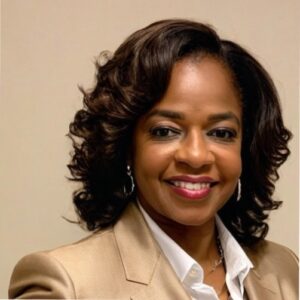
Board Spotlight: Women Driving Change in Our Communities

March 26, 2026

Home News and Updates Board Spotlight: Women Driving Change in Our Communities

Women Leading the Work Forward

Women’s History Month is a moment to recognize leadership. In community economic development, leadership is not symbolic. It is active, persistent, and often happens behind the scenes to reshape systems and expand access to opportunity.

Across The Coalition’s Board of Directors, women leaders are helping to guide that work. Their perspectives span housing, small business development, policy, and community engagement. What connects them is a shared focus on equity and a commitment to solutions that are grounded in real community needs.

This spotlight highlights these leaders whose ideas and experiences are helping to shape the future of the field.

Olive Idehen: Building the Foundation for Lasting Impact

Long before The Coalition became what it is today, Olive Idehen was helping to lay its foundation.

As the organization’s founding Executive Director and now Vice Chair of the Board, her career reflects a deep understanding of how systems, institutions, and capital intersect to shape community outcomes. Her work has spanned the nonprofit, philanthropic, and financial sectors, giving her a uniquely comprehensive view of community development.

She has approached the field from multiple vantage points. As a practitioner advancing affordable housing, as a funder supporting community initiatives, and as a financial institution leader working to align capital with community need. Across each role, a consistent focus emerges. Strong organizations are essential to strong communities.

Today, through her consulting firm, Callive, LLC, she focuses on helping mission-driven organizations build the internal strength required to sustain their impact. Her work centers on governance, leadership, and operational excellence. The goal is not just effectiveness in the short term, but long-term sustainability.

Her perspective reinforces a critical but sometimes overlooked truth. Community outcomes are shaped not only by programs and policies, but by the strength of the organizations delivering them.

Olive’s leadership continues to influence the field by connecting strategy, structure, and purpose in ways that enable organizations to perform at a higher level over time.

Stacie Birenbach: Delivering Housing Through Discipline and Execution

Affordable housing does not move from concept to reality on vision alone. It requires precision, coordination, and the ability to navigate complex financing and development processes.

That is where Stacie Birenbach’s expertise stands out.

As Vice President of Real Estate Development at Community Preservation and Development Corporation, she oversees projects from early feasibility through completion. Her work sits at the intersection of policy, finance, and execution, ensuring that developments are not only planned but delivered.

Her career reflects a consistent focus on making systems work. At the DC Department of Housing and Community Development, she structured nearly $24 million in public investment to create and preserve hundreds of affordable homes. At the Local Initiatives Support Corporation, she supported housing authorities and nonprofit developers across the country through training, technical assistance, and financing strategies.

Earlier in her career, she served as a Peace Corps Volunteer in Latvia, where she helped establish a regional support center for nonprofit organizations that continues to operate today.

What ties these experiences together is a focus on building capacity. Whether working locally or internationally, Stacie’s approach centers on equipping organizations and systems to function more effectively over time.

Her leadership reflects the operational side of community development, where strong execution turns policy goals into real outcomes for communities.

Kimberly Gayle: Turning Strategy into Opportunity for Small Businesses

A clear throughline defines Kimberly Gayle’s career: strategy should lead to tangible opportunities, especially for entrepreneurs who have historically faced barriers to growth.

As Chief Programs Officer at Wacif, she leads initiatives that provide small businesses with the advisory services, technical assistance, and tools needed to move from idea to sustainability. Her work is rooted in helping entrepreneurs navigate complexity and build viable, lasting enterprises.

Her background spans consulting, finance, and program development. From her early work at PricewaterhouseCoopers to leadership roles supporting minority-owned businesses across multiple states, she has consistently focused on bridging gaps between access and execution.

She brings a practitioner’s mindset to her work. Programs must be designed with intention, delivered effectively, and responsive to the real needs of business owners.

In previous roles, she led training and incubation efforts, developed entrepreneurship curricula, and provided direct advising to help businesses scale and secure capital. She has also spent more than a decade teaching business and entrepreneurship, extending her impact to the next generation of leaders.

Kimberly’s leadership reflects a belief that small businesses are not only economic drivers but also pathways to wealth-building and community stability when supported with the right tools and guidance.

Venus Little: Leading with Voice, Action, and Accountability

Venus Little brings an advocacy-driven approach to community economic development, rooted in both personal experience and a deep commitment to helping others navigate complex systems.

Her work spans organizing, education, and policy engagement. She is actively involved in efforts to influence decisions at the federal and local levels, working alongside residents and leaders to push for changes that affect housing, healthcare, education, and food access.

A core part of her approach is making sure people understand what is happening and how it impacts their lives. That includes breaking down policy changes, mobilizing community members, and creating space for collective action.

She sees community involvement as essential to moving the work forward. When people are informed and engaged, they are better positioned to advocate for themselves and their neighbors.

Serving on The Coalition’s board has also expanded her understanding of how different organizations and initiatives connect. That broader view has strengthened her ability to advocate and collaborate more effectively.

Her leadership reflects a hands-on, people-centered approach that keeps community voice at the center of the work.

Emi Reyes: Scaling Impact Through Innovation and Growth

Emi Reyes brings an entrepreneurial mindset to nonprofit leadership, shaped by both personal experience and professional trajectory.

As CEO of LEDC, she focuses on growth, innovation, and the systems required to support small businesses at scale. Her leadership is informed by a deep understanding of entrepreneurship, beginning with her upbringing in a family-owned restaurant and continuing through her work across both nonprofit and private sectors.

Her career path reflects a pattern of building and expanding. She has helped grow operations, manage complex budgets, and guide organizations through periods of transition and opportunity. At LEDC, she has played a central role in advancing funding strategies, strengthening operations, and expanding the organization’s reach.

Her approach is both strategic and forward-looking. She is particularly focused on how organizations can evolve to meet changing economic realities while continuing to serve communities effectively.

Beyond her organizational leadership, Emi is actively engaged in broader ecosystem building. Through her role with the Mayor’s Food Policy Council, she supports efforts to strengthen minority-owned food businesses in underserved communities.

Her leadership highlights the importance of adaptability and innovation in community economic development, especially as organizations work to meet the scale of today’s challenges.

Susanne Slater: Shaping Housing Policy Through Leadership and Experience

Susanne Slater’s career reflects decades of experience at the intersection of housing policy, finance, and leadership.

As President and CEO of Habitat for Humanity of Washington, DC and Northern Virginia, she has guided the organization through significant growth, including the successful merger of two regional affiliates. Her leadership demonstrates an ability to navigate complexity while maintaining a clear focus on expanding access to homeownership.

Her background spans multiple sectors, including federal government, nonprofit leadership, and housing finance. From roles in the U.S. Senate and the Office of Management and Budget to her work with Habitat, she has developed a comprehensive understanding of how policy decisions translate into real-world outcomes.

She continues to play a key role in shaping housing strategy at the local level. Through her leadership positions, including chairing the Advisory Board of the DC Housing Production Trust Fund and serving on the Black Homeownership Strike Force, she contributes to efforts that influence how resources are allocated and how housing goals are achieved.

Her perspective brings a policy-informed lens to community development, grounded in both experience and execution.

Susanne’s leadership underscores the importance of aligning policy, funding, and organizational capacity to create meaningful and lasting change in housing access.

Veronica Wright: Expanding Opportunity Through Connection

Veronica Wright approaches economic development through the lens of lived experience. As a resident of Ward 8, she sees both the barriers that exist and the strength within the community every day.

Her perspective centers on a clear belief that where someone lives should not determine what opportunities are available to them.

That belief informs how she thinks about growth in Washington, DC. It is not enough for the city to grow. That growth must reach every ward and include the small businesses and families that sustain local economies.

One idea she sees as especially promising is a dual-generation approach to economic mobility. By connecting small businesses and workforce initiatives directly with local high schools, this model creates opportunities for both parents and students at the same time.

In practice, that could look like:

  • Financial literacy and adult education are offered through trusted community spaces

  • Mentorship pipelines linking small businesses with students

  • Stronger alignment between workforce development and real community needs

For Veronica, the value of serving on the board is rooted in the organization’s commitment to inclusion. She sees The Coalition as a place where community members are not only part of the conversation, but are helping to lead it.

Shauna Yeldell: Strengthening Systems for Long-Term Impact

Shauna Yeldell’s work is grounded in addressing the structural inequities that continue to shape economic outcomes in communities of color.

Her focus is on sustainability. That means not only investing in communities that have been historically under-resourced, but also ensuring that the systems supporting those communities are strong, coordinated, and built to last.

She points to collaboration among Community Development Financial Institutions as a key opportunity. Stronger alignment across CDFIs could expand access to capital, reduce fragmentation, and increase the overall impact of community investment efforts.

This kind of systems-level thinking reflects an important shift in the field. Lasting change requires coordination across organizations, sectors, and strategies.

Shauna also values the opportunity to engage more deeply with fellow Coalition members and better understand the policy landscape in DC. That exchange of knowledge strengthens both individual leadership and collective impact.

Community economic development requires more than individual programs. It calls for alignment, advocacy, and leadership that is responsive to the realities people face every day.

The women highlighted here are just a snapshot of a range of perspectives and approaches, from systems-level strategy to grassroots organizing. Together, their insights point toward a more connected and inclusive future.

Their leadership is part of a broader network of voices helping to shape The Coalition’s work and advance economic opportunity across DC.

We dedicate this Women’s History Month to honoring all the amazing women serving on our Board of Directors.

Become a Member

Become a member of The Coalition today, and join the fight for a District where all residents can live in thriving communities that are racially, economically and socially just!

Join Now

Stay in touch with The Coalition news & events by subscribing to our free e-newsletter.

  • This field is for validation purposes and should be left unchanged.